Charging rate and compatibility
Confirm the exact EV’s AC limit and connector arrangement. A 22 kW charger is not automatically faster for a car limited to a lower rate.
EV charging across Melbourne
Compare home EV chargers in Australia by vehicle compatibility, charging rate, smart controls,\ \ solar features and property requirements before buying.
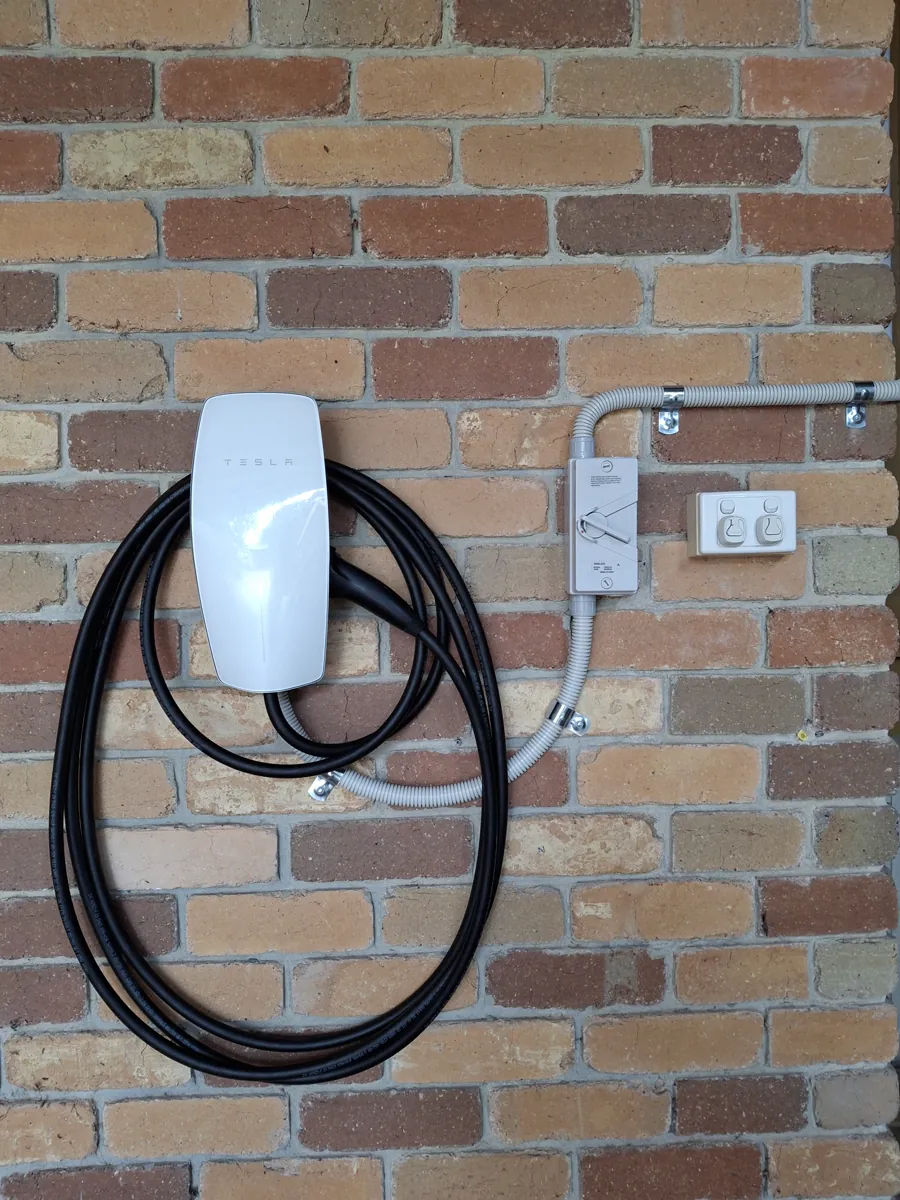
The practical starting point
A charger comparison should begin with three simple questions. How much do you drive most days? How long is the vehicle parked at home? And what can the property safely supply? From there, consider the charger’s connector, cable length, smart schedule functions, outdoor suitability and any compatibility with existing solar equipment. A product may be well regarded and still be wrong for your garage or vehicle. Specific model features and prices change, so current manufacturer instructions matter more than a static best-brand claim. Use this guide to define what matters before selecting a unit.
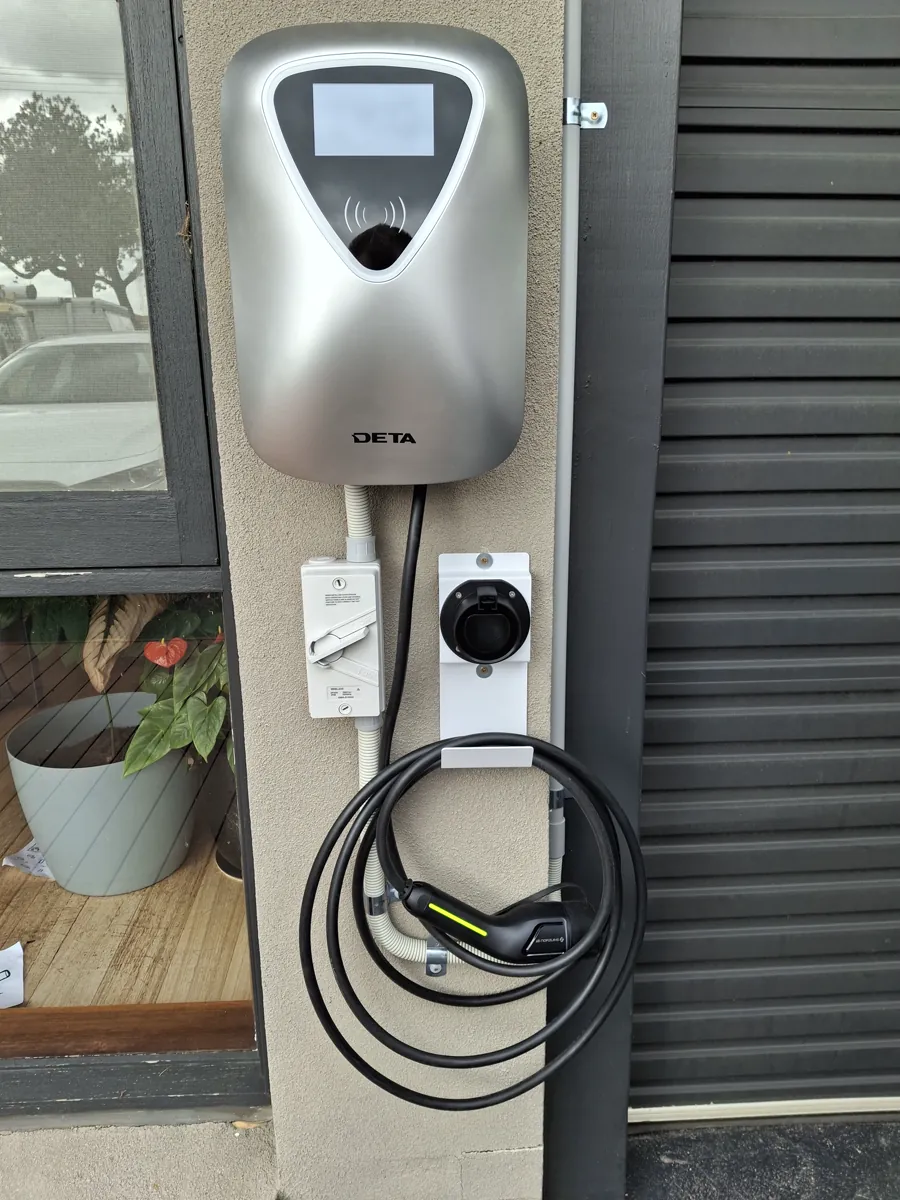
01 / EV charging guidance
The right electrical work depends on the equipment, available supply and site conditions. Most buyers can compare chargers across a consistent set of criteria: suitable AC charging capability, vehicle compatibility, indoor or outdoor installation rating, cable arrangement, controls and monitoring, manufacturer support and electrical requirements. The wall unit’s advertised maximum rate should not be confused with the car’s onboard AC limit or spare household capacity. Solar-aware functions may need compatible energy sensing, while app features may need network connectivity. A qualified installation assessment can also reveal whether a chosen unit creates unnecessary electrical work compared with a simpler suitable alternative.
EV charging essentials
These are the details that can change the recommendation.
Confirm the exact EV’s AC limit and connector arrangement. A 22 kW charger is not automatically faster for a car limited to a lower rate.
Think about which side the vehicle charges from, where it parks and whether a tethered cable would be convenient in a shared garage.
Check which functions are built in, what additional hardware is required and whether subscriptions or internet access affect your chosen features.
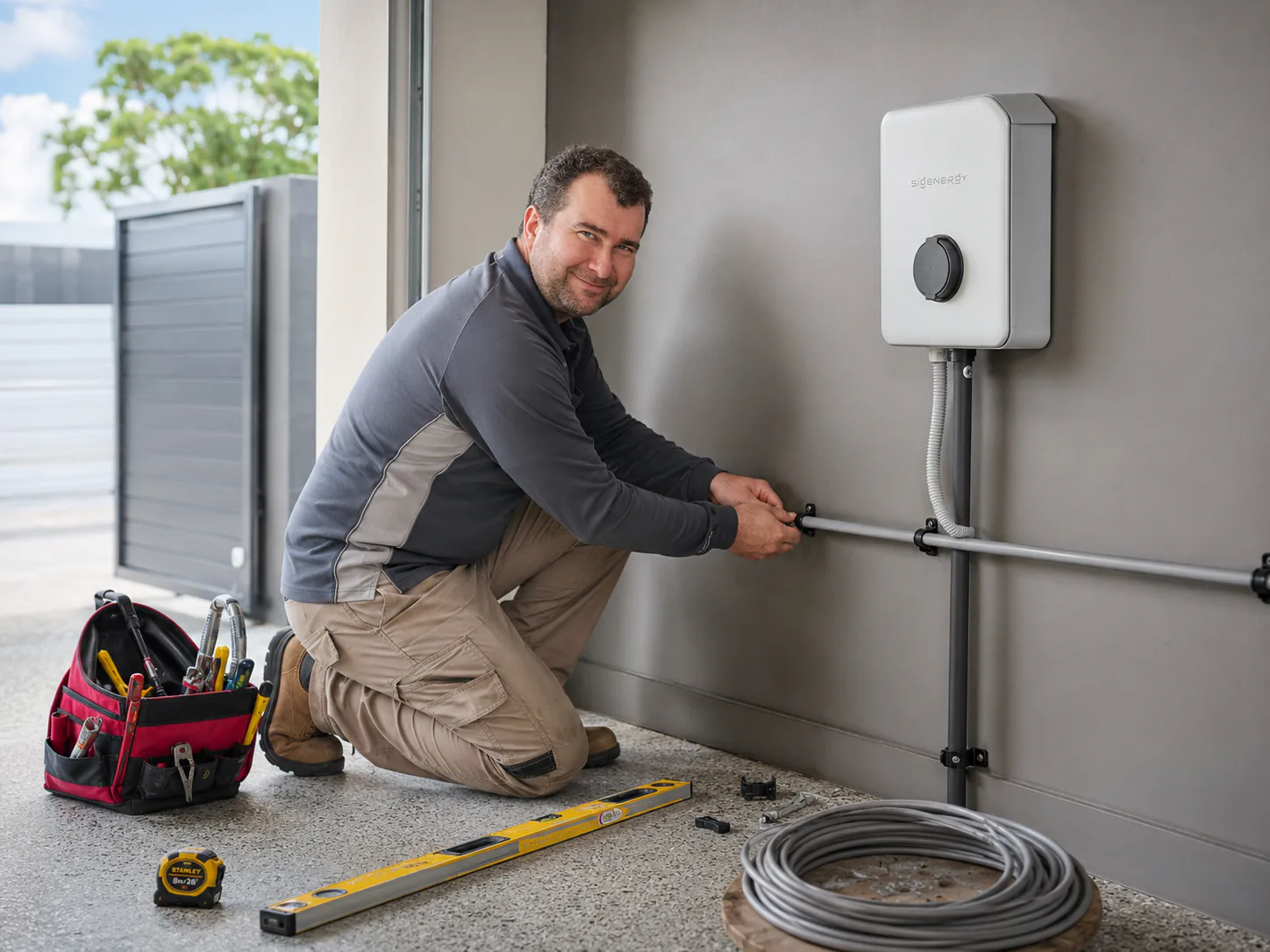
03 / EV charging guidance
A useful quote starts with the right information. The electrical work is scoped after the property, equipment and charging needs have been considered.
Record the EV model, daily distance, parking hours, mounting position and must-have features. Separate essential functions from appealing extras.
Compare two or three current charger models against verified specifications, electrical requirements and support arrangements. Check whether your existing solar or network setup is compatible if those features matter.
Request an installation assessment before buying a product with uncertain power or mounting needs. The cost of the full setup matters more than a standalone charger price.
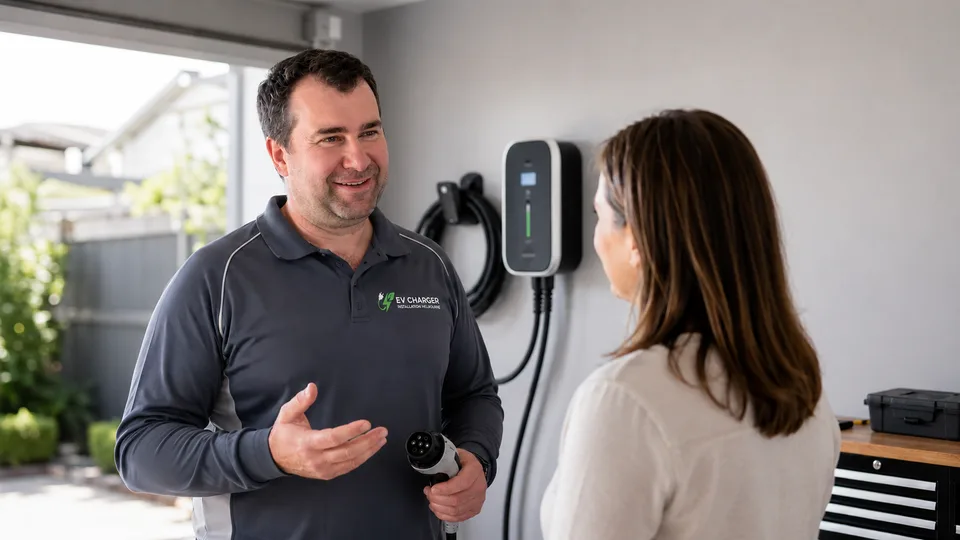
04 / EV charging guidance
A few checks now make the next conversation more productive. Does the exact model support the charger’s connector and likely AC charging rate? Can the electrical supply and proposed circuit support the chosen configuration after professional assessment? Will the vehicle usually be parked long enough to recover the energy you need? Who handles product warranty, updates, accounts and replacement parts for the selected charger?
Clear advice, tailored to site
A few checks now make the next conversation more productive. Does the exact model support the charger’s connector and likely AC charging rate? Can the electrical supply and proposed circuit support the chosen configuration after professional assessment? Will the vehicle usually be parked long enough to recover the energy you need? Who handles product warranty, updates, accounts and replacement parts for the selected charger?

05 / EV charging guidance
These pages cover connected decisions without repeating the same advice.
Home charger selection, practical siting, electrical checks and installation planning.
Practical comparison of charging phase options and realistic vehicle charging rates.
Using existing solar generation with a compatible home charging setup.
Helpful answers
There is no universal answer based only on vehicle brand. Confirm connector compatibility, the vehicle’s AC acceptance limit, home supply, charging routine and required controls. A suitable third-party charger may be practical where its current specifications support the vehicle.
Only after considering the property’s three-phase supply, the vehicle’s acceptance limit and your actual charging needs. Paying for a higher nominal rating may not improve charging speed. Future expansion should be weighed against current electrical work and costs.
A tethered cable can be convenient for daily use but needs practical storage and reach. An untethered unit may suit some shared or compact spaces. Compare vehicle positioning, weather exposure and the current model’s connection requirements.
They can be useful if you will actually use schedules, usage information or compatible solar-surplus control. Check required sensors, network coverage and ongoing costs. A simple charger may be appropriate if those functions do not provide value to your routine.
You can shortlist products first, but it is sensible to confirm site suitability before purchasing. The switchboard, cable route, mounting conditions and available supply can change which option is practical and what the full installation will cost.
Let’s get you charging
Tell us about your vehicle, parking space and property. EV Charger Install Melbourne can help you start a practical installation enquiry. Request an EV charger quote