Time-based schedules
A compatible charger or vehicle may support charging during a selected window. Check which device controls the schedule to avoid conflicting settings.
EV charging across Melbourne
Explore smart EV charger installation in Melbourne, including app commissioning, scheduled charging,\ \ connectivity and the electrical checks a connected charger needs.
The practical starting point
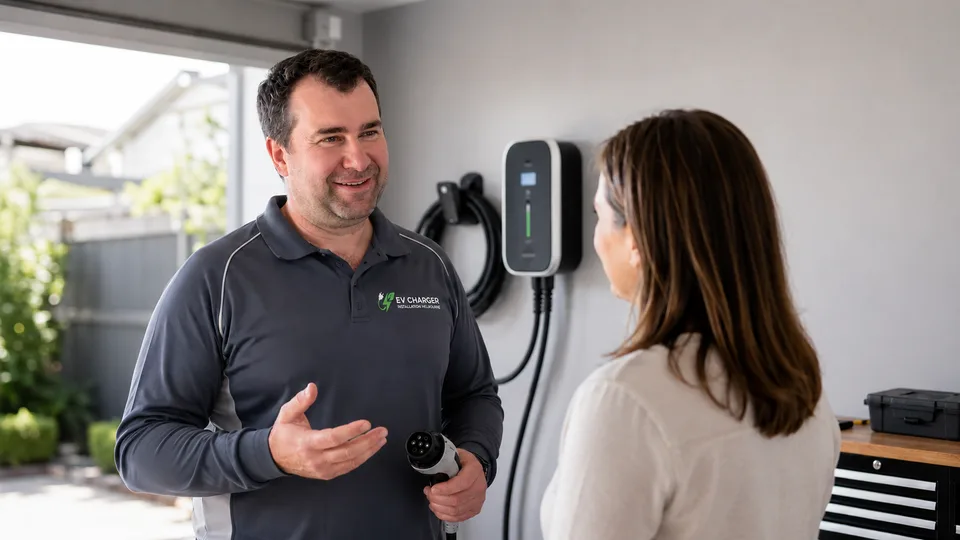
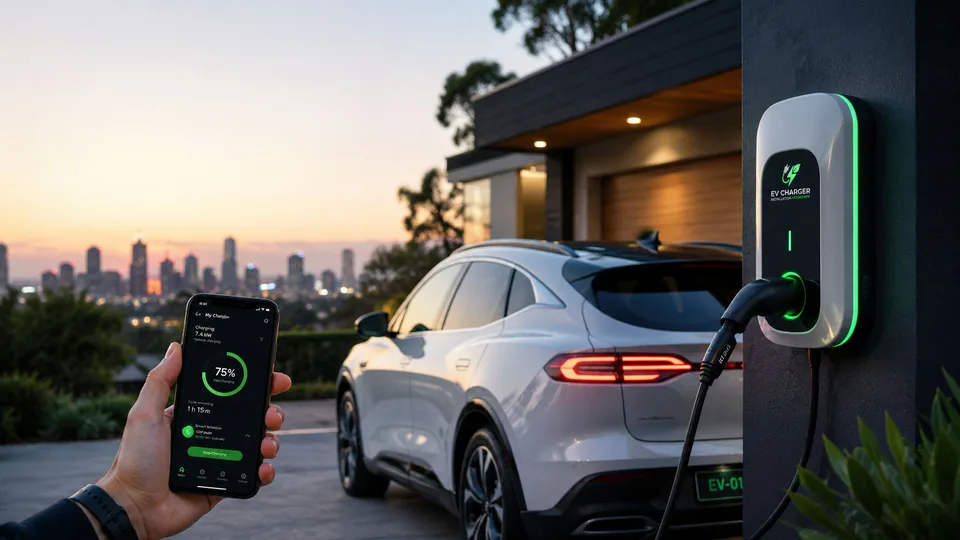
A connected charger may allow an EV owner to set charging times, view sessions or manage access from a phone. Those functions are not identical across products, and some depend on internet access, subscriptions or other services. A garage at the back of the property can also have weak Wi-Fi even when the house connection is strong. Before deciding which unit to buy, work out which features matter: off-peak schedules, vehicle-sharing rules, solar-aware operation or simple monitoring. Then check the product’s actual support and the electrical supply needed for installation.

01 / EV charging guidance
The right electrical work depends on the equipment, available supply and site conditions. Smart EV charger installation includes the normal electrical considerations—supply, circuit design, protection, mounting and testing—plus any supported device commissioning and network configuration. Smart functions must not be confused with load management for an entire building or depot. Some systems control one charger’s schedule; others integrate with meters or multiple chargers. The right option depends on the vehicle, home electrical demand, product compatibility and how much the customer wants to manage through an app after handover.
EV charging essentials
These are the details that can change the recommendation.
A compatible charger or vehicle may support charging during a selected window. Check which device controls the schedule to avoid conflicting settings.
Some systems report charging usage or estimated energy. The accuracy and detail depend on the device and how it measures or records electricity.
App functions, guest permissions and connected updates may require account setup, supported networks and an ongoing software service.

03 / EV charging guidance
A useful quote starts with the right information. The electrical work is scoped after the property, equipment and charging needs have been considered.
Share your vehicle, charging routine and the features you actually want. Identify the charger model if selected and note network coverage at the intended mounting position.
The electrical supply, protection, circuit and charger location are assessed. The product’s connectivity and any energy-monitoring requirements are reviewed separately from the base wiring work.
Agree on the commissioning scope. After fitting and testing, the supported app or scheduling functions should be demonstrated and the customer should understand what requires network connectivity.
04 / EV charging guidance
The final scope should reflect the property and equipment, not an assumed standard installation.
Garage signal strength and network setup can affect connected commissioning and reliable remote features.
Surplus-solar or load-responsive features can require compatible sensors, meters and additional electrical scope.
Check which functions are built into the charger, which require subscriptions and which may need other equipment.
Clear advice, tailored to site
The final scope should reflect the property and equipment, not an assumed standard installation.
05 / EV charging guidance
These pages cover connected decisions without repeating the same advice.
Using existing solar generation with a compatible home charging setup.
Controlling simultaneous EV charging demand at homes, buildings and depots.
Home charger selection, practical siting, electrical checks and installation planning.
Helpful answers
Basic charging and connected features have different requirements. Some chargers can operate without continuous internet access but need connectivity for remote control, setup or updates. The exact model’s guidance determines what happens offline.
Scheduling can help you use a suitable electricity tariff when lower rates are available, but savings depend on your plan, vehicle needs and actual charging times. A connected charger does not guarantee a lower bill by itself.
Some vehicles provide scheduling or charging controls, and some wall chargers offer similar features. It is worth comparing the two so schedules do not conflict. The best approach depends on the vehicle, charger and desired controls.
Not always. Surplus-solar tracking needs compatible charger functions and appropriate monitoring hardware. A simple daytime schedule is not the same as adjusting charging power based on live household energy use.
The agreed installation scope should state whether app setup, connection checks and a basic operating demonstration are included. Account ownership, passwords, subscriptions and ongoing remote support should be clear to the customer.
Let’s get you charging
Tell us about your vehicle, parking space and property. EV Charger Install Melbourne can help you start a practical installation enquiry. Request an EV charger quote