Trades and service vehicles
Vans and work vehicles may return home or to a depot with different energy requirements. Decide which locations really need charging and which vehicles share equipment.
EV charging across Melbourne
Plan fleet EV charging in Melbourne around vehicle schedules, depot parking, electrical demand\ \ and staged charging infrastructure. Start a fleet enquiry.
The practical starting point
A fleet depot can have many parking spaces but only a limited number of hours to recharge the vehicles that need to leave first. Some vehicles may be back each afternoon; others return late or operate in shifts. Charging demand therefore depends on use patterns as well as battery size. The first useful step is to map how many vehicles need energy, when they are parked and whether a staged rollout is planned. That information helps determine which questions an electrical feasibility review should answer and whether load management or a different parking arrangement may be relevant.
01 / EV charging guidance
The right electrical work depends on the equipment, available supply and site conditions. Fleet EV charging projects may involve several AC chargers, a depot electrical assessment, distribution routes, access controls and monitoring requirements. The appropriate charging level depends on vehicle types, daily duty cycles, available overnight time and site power. High-power or DC charging is a separate project category and must not be assumed to be available. A sound early plan separates today’s confirmed vehicles from future assumptions so capital work can be considered in stages without designing the wrong system for the current operation.
EV charging essentials
These are the details that can change the recommendation.
Vans and work vehicles may return home or to a depot with different energy requirements. Decide which locations really need charging and which vehicles share equipment.
Shift changes and short turnaround windows make departure readiness important. An overnight-only assumption may not fit every duty cycle.
Several vehicles with predictable parking hours may be managed through shared AC charging, provided access, charging demand and electrical capacity are properly planned.
03 / EV charging guidance
A useful quote starts with the right information. The electrical work is scoped after the property, equipment and charging needs have been considered.
Provide a vehicle list, typical daily travel, arrival and departure windows, depot plan and expected transition dates. State whether all vehicles must be ready at the same time.
A qualified technical review considers maximum demand, distribution infrastructure, parking positions, safe circulation and suitable AC charging options. Specialist high-power requirements should be scoped separately.
Agree on an initial stage with clear equipment, electrical works and operational assumptions. Any later expansion should trigger a renewed capacity and scheduling review rather than an automatic replication of the first units.
04 / EV charging guidance
The final scope should reflect the property and equipment, not an assumed standard installation.
The number of vehicles plugged in at once matters alongside the existing building load. Managed charging may alter the feasible staging.
Long rows of parking, outdoor equipment, site traffic and trenching can change the electrical work significantly.
Larger batteries or a different shift pattern can make today’s assumptions unsuitable later. Document the growth scenario separately from the initial stage.
Clear advice, tailored to site
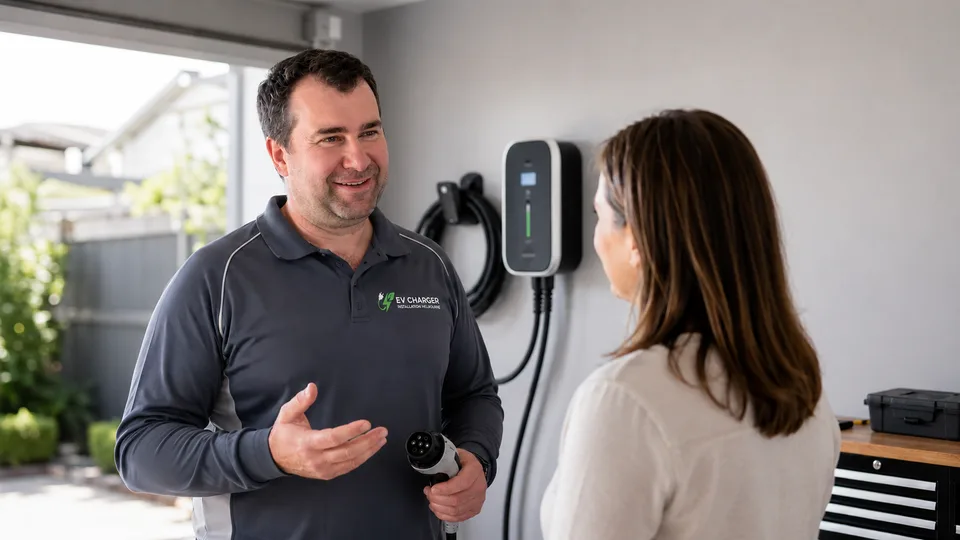
The final scope should reflect the property and equipment, not an assumed standard installation.
05 / EV charging guidance
These pages cover connected decisions without repeating the same advice.
Commercial charging planning for business premises, parking layouts and electrical supply.
Controlling simultaneous EV charging demand at homes, buildings and depots.
Staff and visitor charging plans for workplaces and office parking.
Helpful answers
It depends on the number of vehicles, energy required each day, parking duration and overlap between shifts. Some depots may use shared chargers or planned scheduling, while others need more dedicated capacity. A vehicle count alone is not enough.
It can help allocate available power among chargers based on site rules or demand, when compatible equipment is used. It cannot overcome every supply limitation. A site assessment should establish what capacity is actually available.
No. Where vehicles remain parked long enough, AC charging may be an appropriate option. Short turnaround windows or high daily energy requirements can change the analysis. DC infrastructure has different technical and delivery requirements and should not be assumed from an ordinary depot enquiry.
Staging can be sensible if the overall electrical route and capacity implications have been considered. The first installation should be sized for real current demand, while later stages remain subject to technical review and project approval.
Prepare the vehicle types, typical daily travel, arrival and departure schedules, site plan, parking access and any available electricity bills or switchboard information. These inputs make the discussion more useful than starting with charger quantity alone.
Let’s get you charging
Tell us about your vehicle, parking space and property. EV Charger Install Melbourne can help you start a practical installation enquiry. Request an EV charger quote