Charging will not begin
Note whether the charger has power, what the vehicle displays and any error shown in the charger app. A model-specific message may help identify the appropriate support route.
EV charging across Melbourne
EV charger not working in Melbourne? Understand safe first checks, common symptoms and when\ \ a licensed electrician or manufacturer should assess a wall charger fault.
The practical starting point
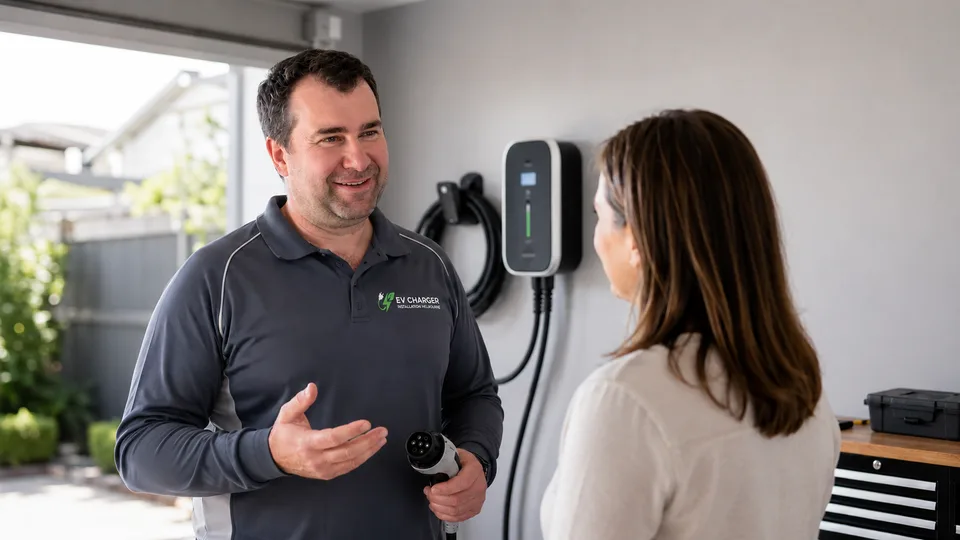
A charging interruption can start with the vehicle, the charger, the app or the electrical supply. These problems may look similar from the driver’s seat but require different checks. A tripped protective device, communication error, damaged cable or manufacturer fault message should not be treated as proof that the charger itself needs replacement. Record what happened, the exact model and any visible error code. Never open a charger, reset protection repeatedly or attempt electrical repairs yourself. We can help qualify the enquiry and identify whether an electrical assessment or manufacturer support pathway is more suitable.
01 / EV charging guidance
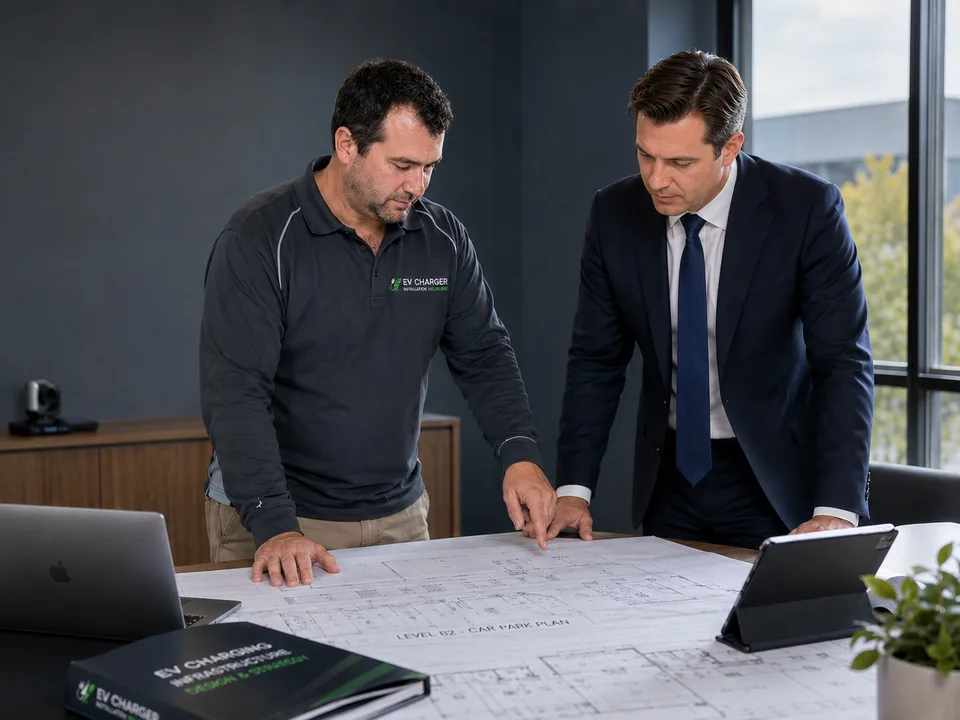
The right electrical work depends on the equipment, available supply and site conditions. Professional EV charging fault assessment may cover the condition of the equipment, supply and protective devices, visible signs of damage, connection arrangements and relevant manufacturer diagnostics. The electrician’s scope must be compatible with the charger model and its warranty requirements. Some faults may be resolved through settings or a supported service process; others require authorised manufacturer support or equipment replacement. The exact repair services available and any exclusions should be confirmed before a booking is accepted.
EV charging essentials
These are the details that can change the recommendation.
Note whether the charger has power, what the vehicle displays and any error shown in the charger app. A model-specific message may help identify the appropriate support route.
Record when the interruption happens and whether other household loads or events coincide with it. Avoid repeated resetting if a protective device keeps operating.
Visible damage, a burning smell, unusual heat or water ingress require a cautious approach. Stop using the equipment and seek qualified advice rather than testing it again.

03 / EV charging guidance
A useful quote starts with the right information. The electrical work is scoped after the property, equipment and charging needs have been considered.
Outline the fault, when it began, the charger model, error indicators and any relevant vehicle messages. If there is visible damage or unsafe behaviour, leave the equipment unused.
An appropriate professional determines whether the issue appears to involve the electrical supply, vehicle connection, charger settings or an internal product fault. Product warranty and authorisation constraints are checked.
The next step may be electrical rectification, a manufacturer support referral, a controlled reconfiguration or a replacement quote. Work should not begin until the diagnosis and service scope are clear.
04 / EV charging guidance
The final scope should reflect the property and equipment, not an assumed standard installation.
Some products require specific authorised diagnosis or repair arrangements. Check current warranty conditions before any unit is opened or modified.
A charging symptom may come from protective devices, supply limitations or circuit issues rather than a failed charger.
A discontinued or uneconomic-to-repair unit may be better assessed for replacement with compatible current equipment.
Clear advice, tailored to site
The final scope should reflect the property and equipment, not an assumed standard installation.
05 / EV charging guidance
These pages cover connected decisions without repeating the same advice.
Safe care and inspection considerations for home and shared EV charging equipment.
Replacing old or faulty wall units while checking the existing electrical circuit.
Contact details and the information needed to start a charging installation enquiry.
Helpful answers
Possible causes range from a power supply issue, an operated protective device, vehicle settings, communications or a fault inside the charging unit. The symptoms and error information help narrow the possibilities, but electrical diagnosis requires appropriate professional assessment.
Only follow ordinary user actions expressly permitted by the current manufacturer instructions, and do not open equipment or touch electrical wiring. If a safety device repeatedly trips or the charger shows damage or overheating, stop using it and seek qualified advice.
No. The vehicle, charging cable, network and supply can all contribute to a failed session. A model-specific code and the circumstances of the error are useful. The cause should be established before ordering a replacement charger.
Warranty service depends on the brand, model, proof of purchase and the manufacturer’s current conditions. Some faults need an authorised service process rather than general electrical repair. Check the warranty route before changes that could affect coverage.
Provide the charger make and model, approximate age, error messages, whether the vehicle charges elsewhere and photographs of visible damage or indicator lights. Do not remove covers for photos; the enquiry can start with information you can observe safely.
Let’s get you charging
Tell us about your vehicle, parking space and property. EV Charger Install Melbourne can help you start a practical installation enquiry. Request an EV charger quote