A vehicle with suitable AC capability
Confirm the actual vehicle variant and its AC charging specification. An advertised 22 kW wall charger cannot override a lower onboard limit.
EV charging across Melbourne
Explore three-phase EV charger installation in Melbourne, including 11 kW and 22 kW equipment,\ \ vehicle AC limits and electrical supply requirements.
The practical starting point
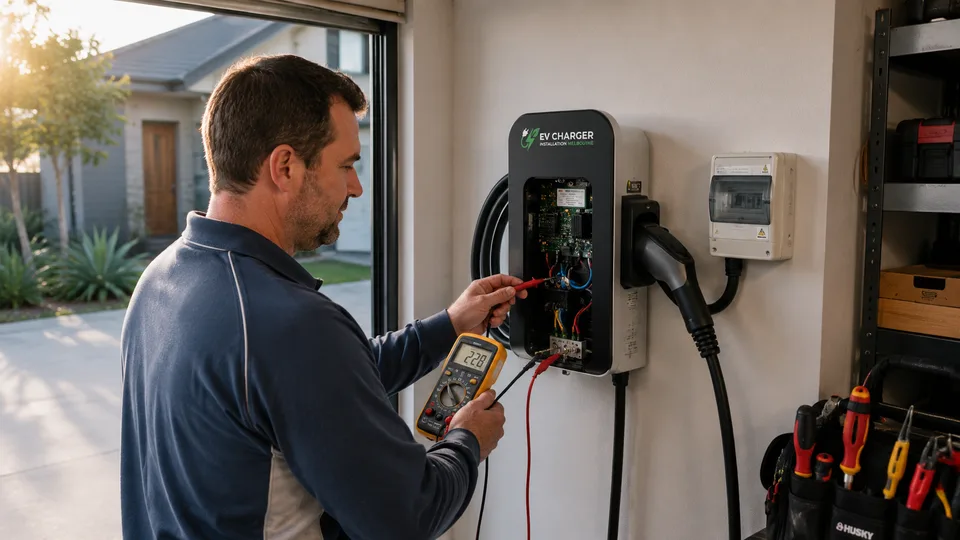
Three-phase charging is often promoted as the fastest home AC option. In practice, the actual rate depends on the vehicle’s onboard charger, the wall unit’s supported settings and what the electrical installation can supply. A property may have a three-phase connection without enough available capacity to operate a high-power charger at its maximum setting alongside all other loads. The decision should begin with why you need the extra rate: how much you drive, how many vehicles share the property and how long you have to recharge. The charger’s rating is only part of that calculation.
01 / EV charging guidance
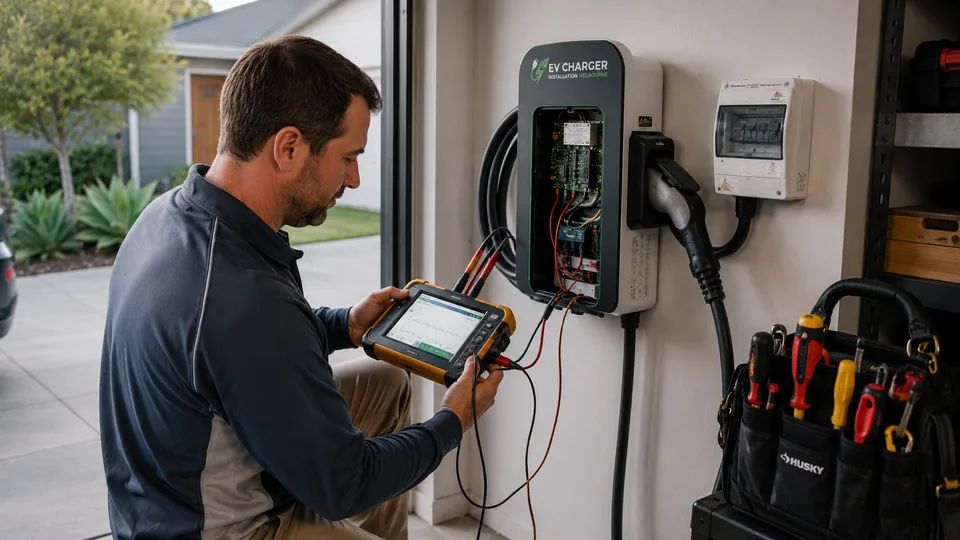
The right electrical work depends on the equipment, available supply and site conditions. Three-phase AC chargers can be available in different nominal power classes, often discussed as 11 kW and 22 kW. Those figures indicate equipment capability under suitable conditions, not guaranteed energy delivered to every car. A vehicle with a lower onboard AC acceptance limit will charge below a more powerful unit’s advertised maximum. The property also needs an appropriate electrical supply, dedicated circuit design, protection and maximum-demand assessment. A qualified electrician must check whether three-phase charging is feasible and what configured charging rate is suitable for the site.
EV charging essentials
These are the details that can change the recommendation.
Confirm the actual vehicle variant and its AC charging specification. An advertised 22 kW wall charger cannot override a lower onboard limit.
Different vehicle schedules and charging windows may make load planning more important than the maximum power of any one charger.
A higher supported rate may be useful where the vehicle genuinely needs energy in a limited period, subject to supply and available charger capacity.
03 / EV charging guidance
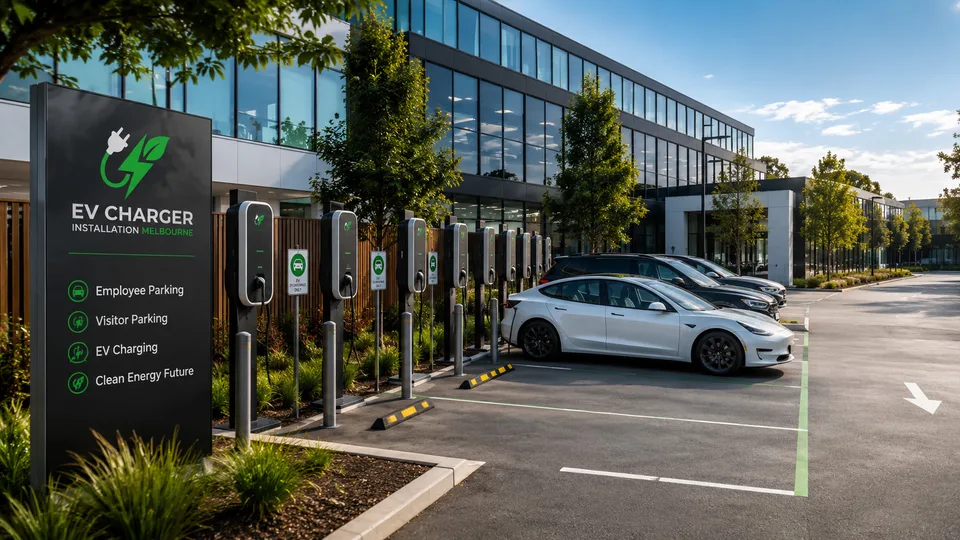
A useful quote starts with the right information. The electrical work is scoped after the property, equipment and charging needs have been considered.
Send the EV make, model and year, chosen charger if any and details of your current electrical supply. Photos of the closed switchboard are useful.
The electrician confirms the phases, available supply, maximum demand, appropriate circuit and protection. The vehicle’s onboard charging limit is considered before recommending a charger size.
Request a scope that states the charger rating and expected configured charging rate separately. The final electrical work must be tested and documented by a suitably licensed professional.

04 / EV charging guidance
The final scope should reflect the property and equipment, not an assumed standard installation.
The property must have a suitable connection and distribution arrangement. A visible three-phase board alone does not settle available capacity.
The charger is assessed alongside existing building loads, circuit requirements and required protective devices.
The vehicle acceptance limit, equipment model and installed configuration determine the achievable AC charging rate.
Clear advice, tailored to site
The final scope should reflect the property and equipment, not an assumed standard installation.
05 / EV charging guidance
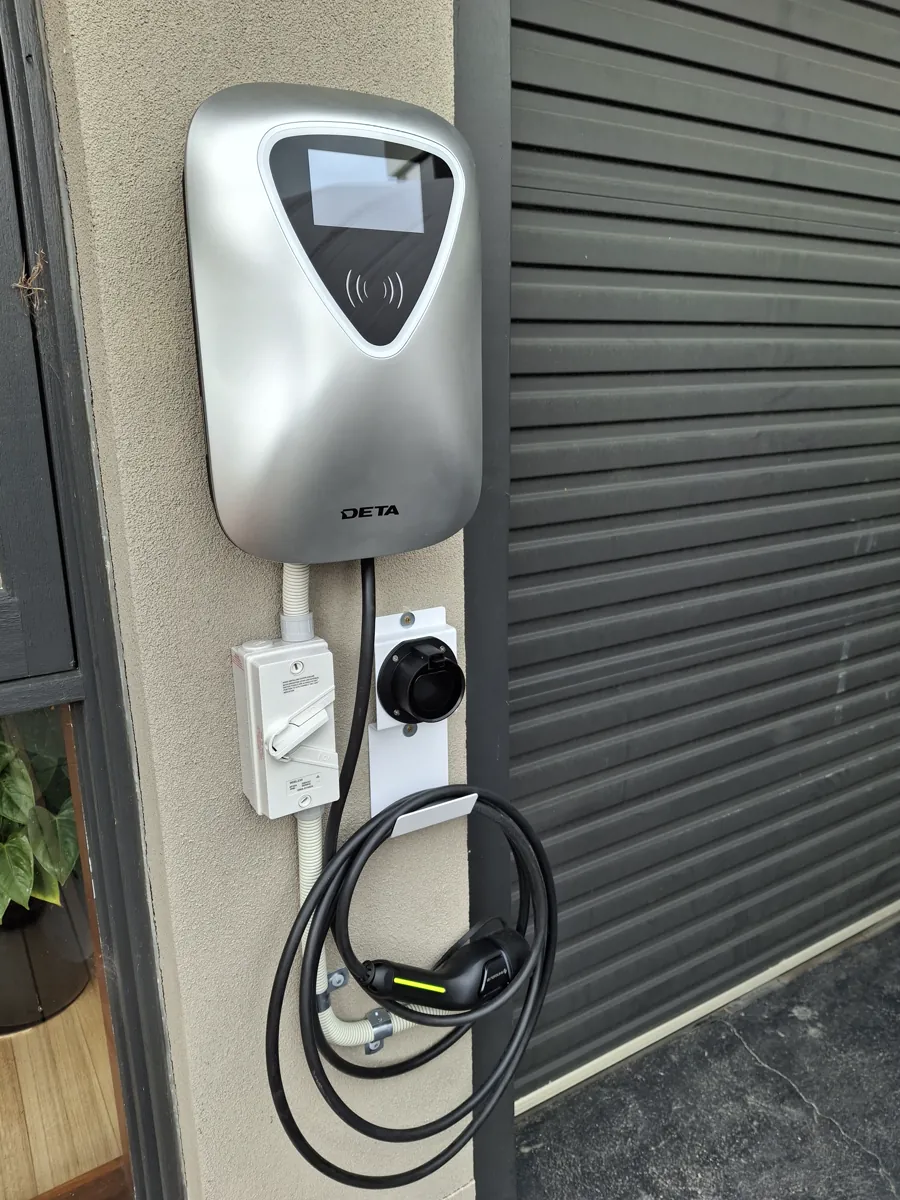
These pages cover connected decisions without repeating the same advice.
Single-phase wall charger suitability and the practical limits of a 7 kW-class setup.
Practical comparison of charging phase options and realistic vehicle charging rates.
Controlling simultaneous EV charging demand at homes, buildings and depots.
Helpful answers
A true 22 kW AC charging arrangement typically depends on a suitable three-phase supply and compatible equipment. The actual rate also depends on the vehicle’s AC acceptance capability and the property’s available capacity. A site review is essential.
No. Many vehicles accept less than 22 kW AC, even when connected to a higher-rated wall charger. The charger and electrical supply must also be configured appropriately. Check the vehicle’s actual onboard charging specification.
They are different nominal AC power classes. Whether the difference matters depends on the vehicle, supply capacity, charging window and equipment requirements. The higher figure is not always the better purchase for a home.
That depends on the supply network, property, electrical work and approval process. It is a separate feasibility and cost question from mounting a wall charger. A licensed electrical provider can advise on the relevant steps and whether the upgrade is justified.
Compatible charger systems may reduce charging demand under defined conditions. This can be useful where other loads vary, but the installed system and supply must be assessed. Load control does not replace suitable circuits, protective devices or required electrical upgrades.
Let’s get you charging
Tell us about your vehicle, parking space and property. EV Charger Install Melbourne can help you start a practical installation enquiry. Request an EV charger quote