The car is home during daylight
A vehicle parked at home during solar production hours may be able to use available generation. If the car is away all day, scheduling and overnight charging may deserve more attention.
EV charging across Melbourne
Explore solar-compatible EV charger installation in Melbourne. Understand surplus solar charging,\ \ compatible controls, electrical capacity and quote considerations.
The practical starting point
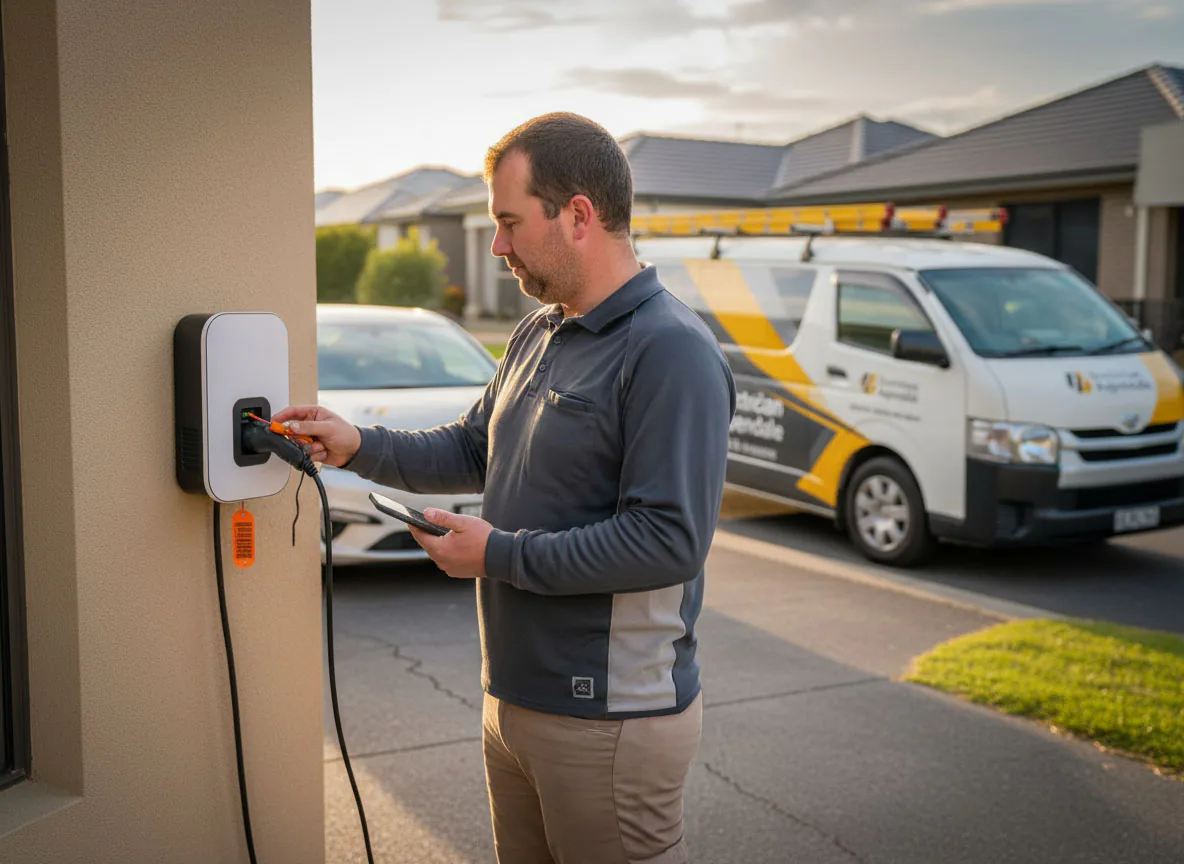
Solar panels do not automatically make every wall charger charge only from surplus generation. A suitable system may need metering, communication with the inverter or other compatible monitoring hardware to respond to changing household demand. Your car also needs to be parked at home while solar output is available. For some people, scheduled off-peak charging will remain an important part of the routine. We focus on connecting those real-life details to the electrical assessment so the chosen equipment and expectations match what the property can support.
01 / EV charging guidance
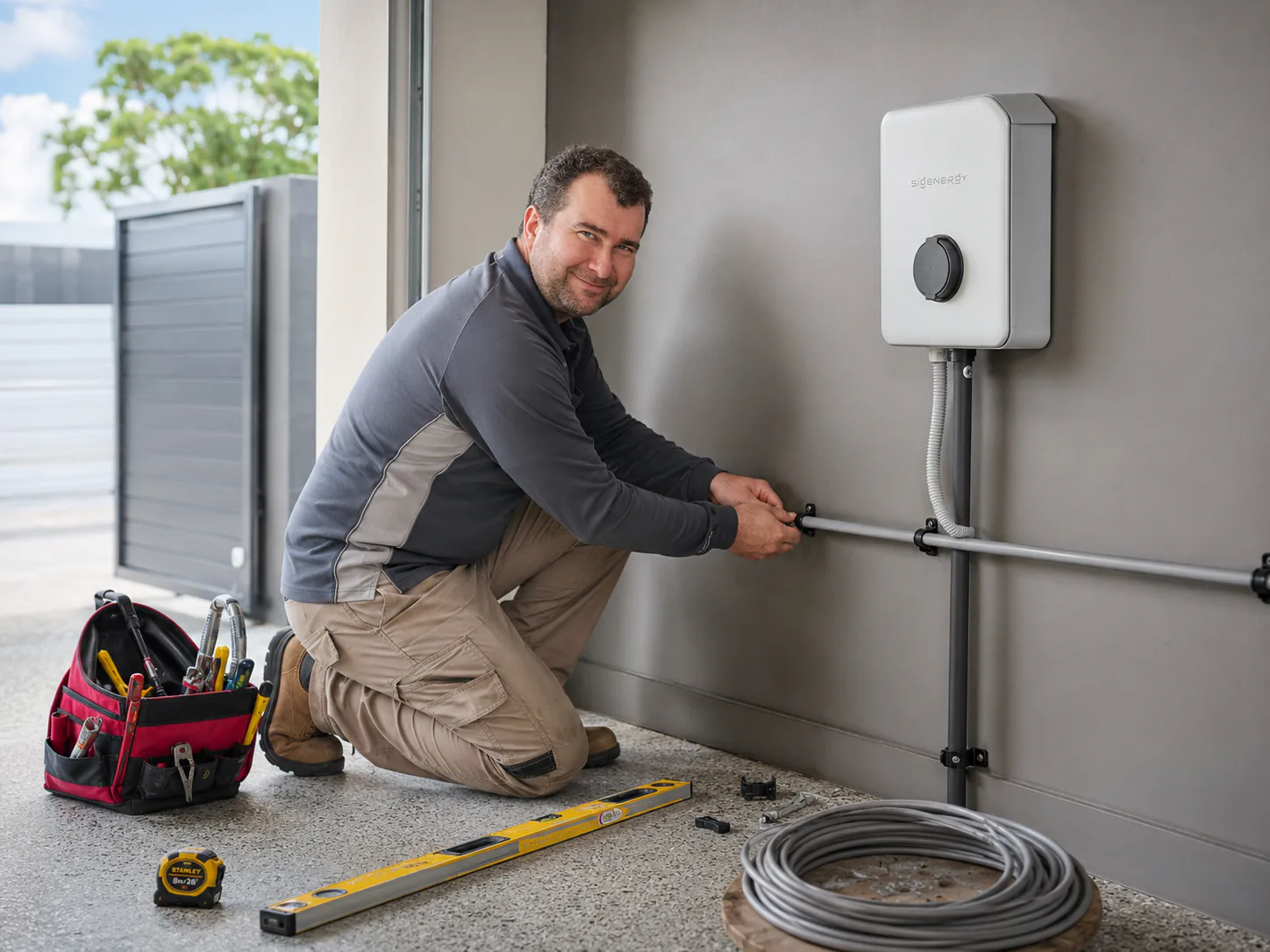
The right electrical work depends on the equipment, available supply and site conditions. A solar-compatible EV charging enquiry should begin with the existing solar system, inverter details, energy monitoring arrangement and the charger under consideration. Solar-aware systems may vary the charging rate or combine grid and solar electricity according to their features and settings. Electrical installation still needs appropriate circuit design, protection, capacity checks and testing. This page covers integration considerations for existing solar and EV charging; it does not assume that a solar PV installation or inverter upgrade is part of the charger job.
EV charging essentials
These are the details that can change the recommendation.
A vehicle parked at home during solar production hours may be able to use available generation. If the car is away all day, scheduling and overnight charging may deserve more attention.
Existing inverter or energy monitoring data may help assess compatible charger options. The right integration depends on the make, model and supported connection method.
Cooking, heating and air conditioning can reduce the surplus available for charging. Compatible dynamic controls may respond to changing output, subject to the charger and meter arrangement.

03 / EV charging guidance
A useful quote starts with the right information. The electrical work is scoped after the property, equipment and charging needs have been considered.
Share your EV and preferred charger, the make of your solar inverter, any monitoring equipment and photographs of the switchboard and proposed charger position.
The relevant charger and energy-monitoring compatibility should be confirmed alongside the electrical supply, circuit and cable route. Discuss when the vehicle will actually be home to charge.
Agree on the equipment and the controls that are in scope. After an approved installation, the charging modes and their limits should be demonstrated using the chosen system’s current guidance.
04 / EV charging guidance
The final scope should reflect the property and equipment, not an assumed standard installation.
The charger may need supported metering or communication hardware to follow surplus generation.
Solar does not remove the need for a properly designed EV circuit, suitable protection and an assessment of household electrical demand.
Charger location, cable length, internet connectivity and access to monitoring equipment influence the installation and commissioning work.
Clear advice, tailored to site
The final scope should reflect the property and equipment, not an assumed standard installation.

05 / EV charging guidance
These pages cover connected decisions without repeating the same advice.
Zappi model choice, energy monitoring and solar-aware setup considerations.
App control, schedules, network coverage and smart charging commissioning.
Controlling simultaneous EV charging demand at homes, buildings and depots.
Helpful answers
Not every wall charger has surplus-solar tracking. Some chargers can be scheduled to operate during daylight hours, while others can respond to measured surplus power using compatible equipment. Confirm exactly what a product supports before buying.
Not always. Compatibility depends on the charger and the existing inverter or monitoring arrangement. Some systems use separate metering hardware. A proposal should clarify what is required and whether the solar equipment itself needs any changes.
That depends on the settings, available sunshine, household consumption and the minimum charging conditions supported by the vehicle and charger. Some modes draw supplementary grid electricity. Ask how the chosen charging mode behaves when clouds pass or household demand rises.
No. An EV charger remains a significant electrical load even where solar can offset part of the energy. Circuit protection, available supply, maximum demand and applicable electrical requirements still need to be assessed.
Send the vehicle and charger model, inverter make and model, photos of the switchboard and proposed charging point, and details of any solar monitoring app or export control arrangement. That helps identify compatibility questions before a site assessment.
Let’s get you charging
Tell us about your vehicle, parking space and property. EV Charger Install Melbourne can help you start a practical installation enquiry. Request an EV charger quote