Terrace home with rear laneway
Parking may be separated from the main electrical board. The route across private land and the available mounting location need review.
EV charging across Melbourne
Explore EV charger installation in inner Melbourne for tight garages, terraces, apartments and\ \ shared parking. Plan approvals and safe electrical routes.
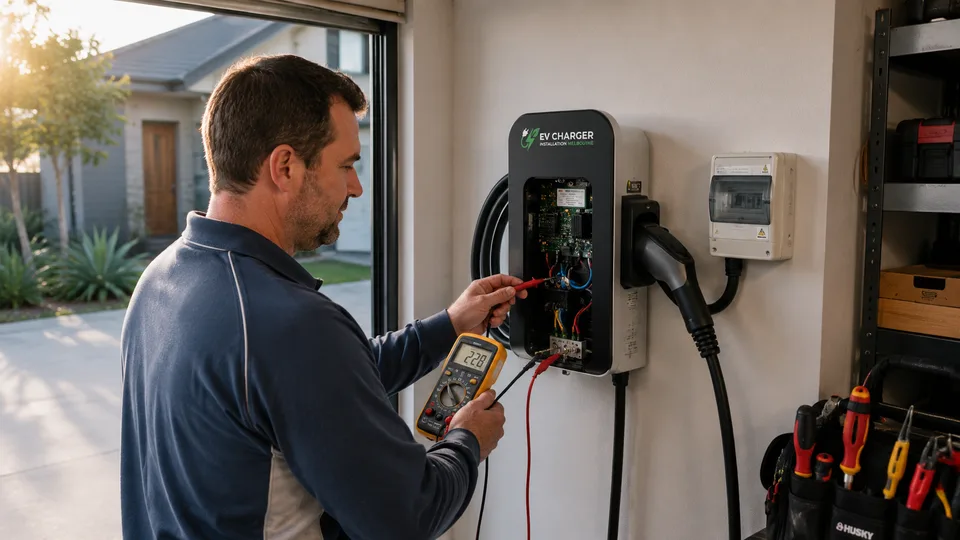
The practical starting point
The right electrical work depends on the equipment, available supply and site conditions. Inner Melbourne EV charging can involve a private home circuit, shared property infrastructure or a parking arrangement with no directly available supply. The feasibility of a charger depends on property ownership, switchboard location, metering, approvals, safe cable placement and available capacity. It is not appropriate to assume that a nearby power point or common wall can be used. An appropriately licensed electrician must assess the technical arrangement; managers or owners corporations may also need to authorise access or work.
EV charging essentials
These are the details that can change the recommendation.
Parking may be separated from the main electrical board. The route across private land and the available mounting location need review.
Allocated parking and shared electrical infrastructure require separate checks. An owners corporation may control access and approvals.
Wall space, vehicle clearance and the path from the home switchboard can influence where a charger can be safely mounted.
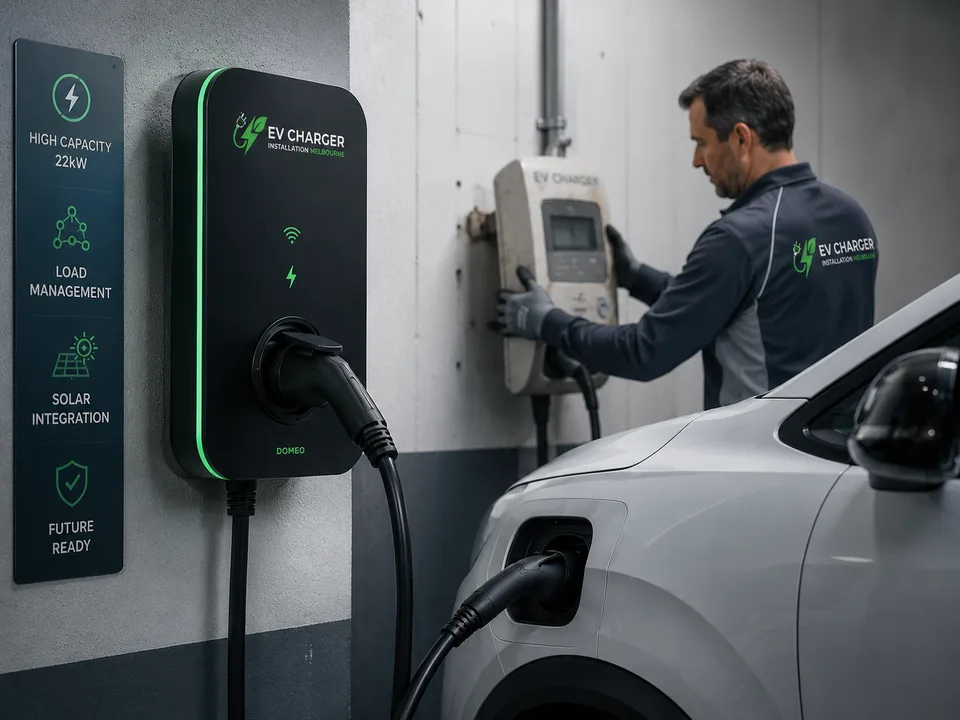
02 / EV charging guidance
A useful quote starts with the right information. The electrical work is scoped after the property, equipment and charging needs have been considered.
Outline the exact parking arrangement, ownership or lease conditions, suburb, EV and switchboard access. Provide a parking plan if possible.
Confirm local availability and obtain a qualified review of electrical supply, safe cable route, capacity and any third-party approvals.
Once the supply and permission pathway is clear, a suitable installation scope and quotation can be considered. Do not purchase equipment on the assumption that a shared circuit will be available.
Clear advice, tailored to site
A useful quote starts with the right information. The electrical work is scoped after the property, equipment and charging needs have been considered.
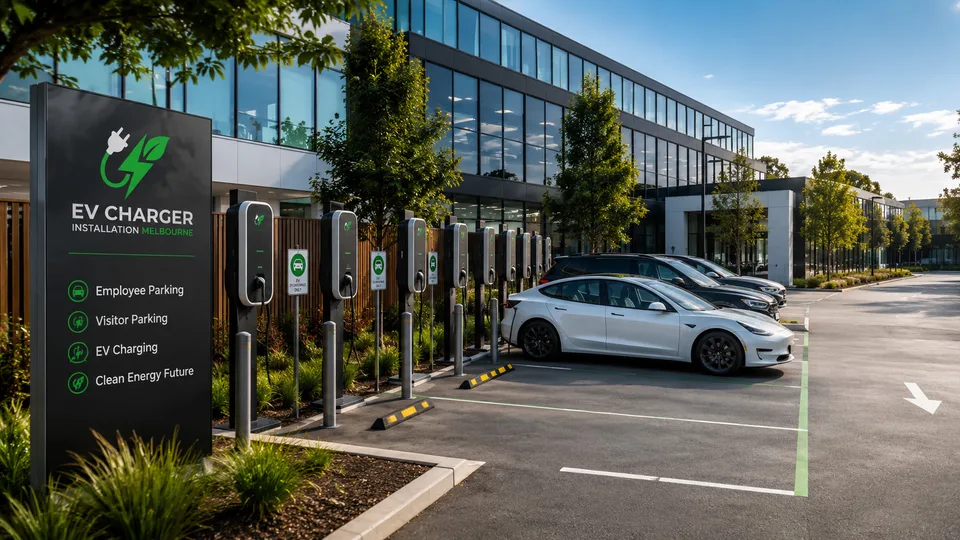
03 / EV charging guidance
The final scope should reflect the property and equipment, not an assumed standard installation.
Shared walls, basement infrastructure or leased parking may need consent beyond the electrician’s technical approval.
Finished interiors, tight shafts and remote parking bays can create significant access and installation considerations.
A shared building may require a different electricity connection or charging management approach from a private home.
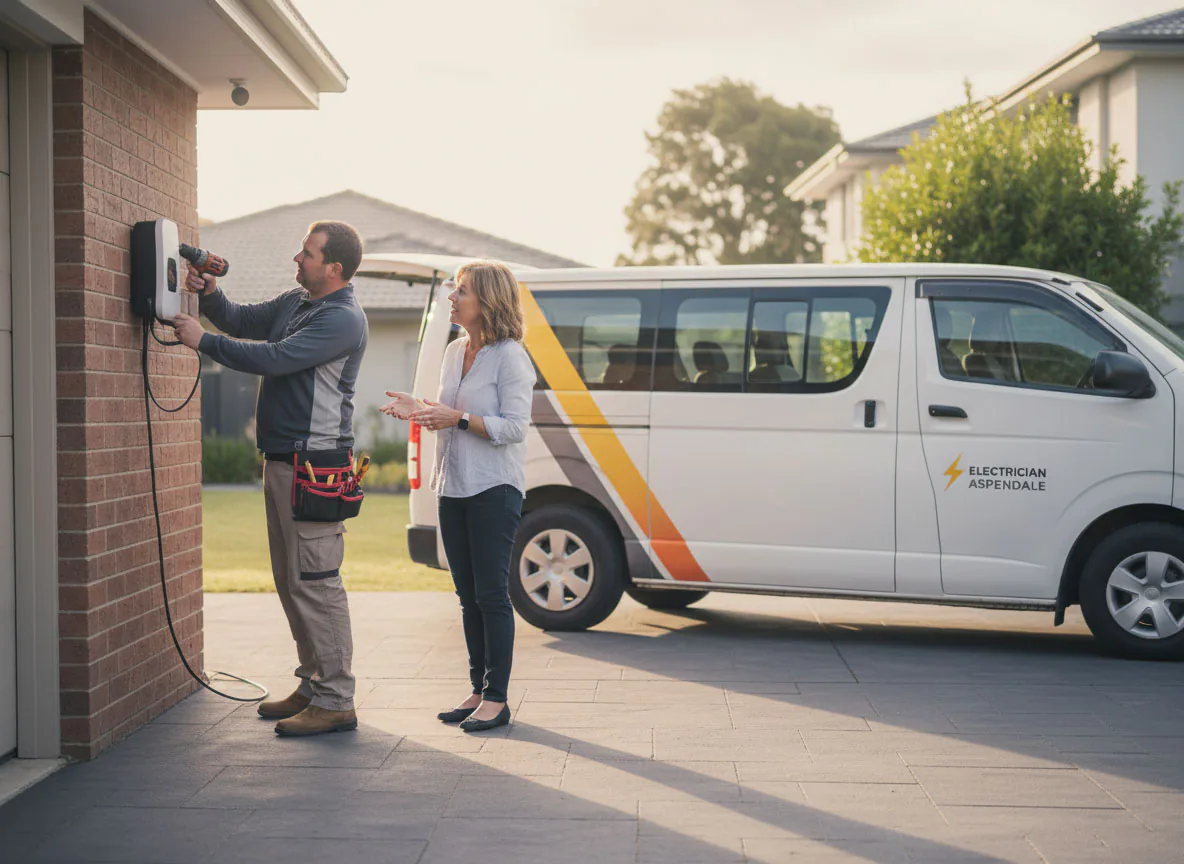
04 / EV charging guidance
These pages cover connected decisions without repeating the same advice.
Private apartment-bay charging considerations, distinct from whole-building strata planning.
A whole-building view of owners corporation approvals, shared supply and future EV demand.
Regional charging enquiry coverage and why site access matters as much as postcode.
Clear advice, tailored to site
These pages cover connected decisions without repeating the same advice.
Helpful answers
Inner-city properties may have compact garages, laneway parking, terraces with no front driveway or apartment bays in shared basements. A charger position that would be easy in a freestanding suburban garage can be difficult when there is little wall space or a cable route crosses common property. Areas such as Carlton, Richmond, Southbank and nearby neighbourhoods illustrate how varied city parking can be. The first conversation should establish exactly where the vehicle parks, how the bay is held and whether the building or owners corporation controls the intended electrical route.
It depends on the lawful parking position and whether there is a suitable approved route for charging equipment. A public footpath or street parking space creates different legal and safety questions from a private garage. Do not run charging cables across public paths.
Possibly, subject to electrical feasibility, metering and building approvals. The allocated bay may be private, while the cable route crosses common property. Start with the owners corporation or building manager.
Not automatically. The vehicle, charge-port position, cable reach, door swing and usable wall space all matter. The charger also needs a safe electrical route and installation in line with the manufacturer’s requirements.
A longer or more difficult route can affect cost and feasibility. Shared spaces and fire-rated building elements may introduce additional considerations. The electrician and building contacts need to assess suitable pathways.
Usually it is better to request a project-specific assessment. A private apartment bay may require building approval, access to electrical rooms, metering decisions or shared-supply planning not present in a typical standalone home installation.
Let’s get you charging
Tell us about your vehicle, parking space and property. EV Charger Install Melbourne can help you start a practical installation enquiry. Request an EV charger quote