Driveway below the main house
A lower-level car space can mean a less direct circuit route from the main electrical board and more exposed mounting conditions.
EV charging across Melbourne
Plan EV charger installation in Melbourne’s eastern suburbs for established homes, sloping driveways,\ \ townhouses and garages. Check local availability.
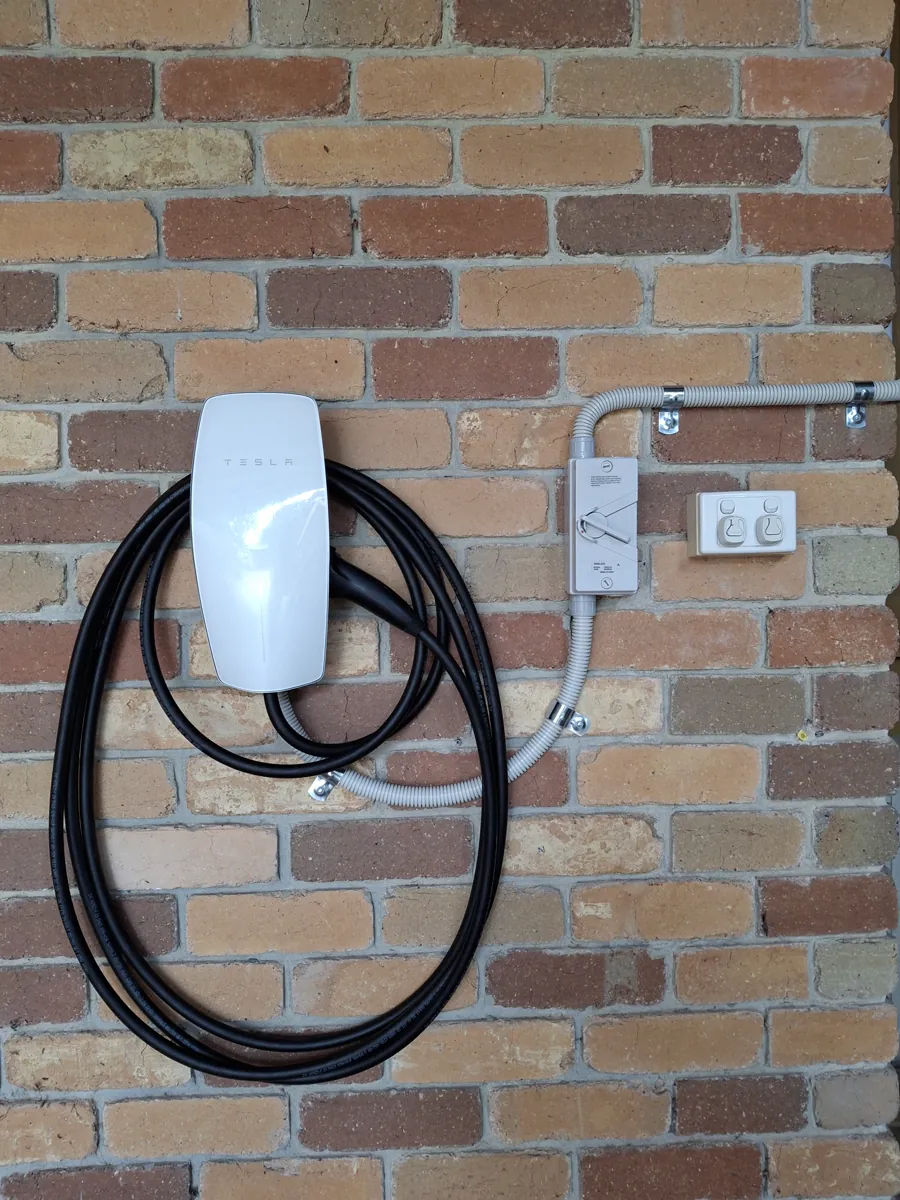
The practical starting point
The eastern suburbs feature a mix of established detached homes, renovations, hillside properties and townhouse developments. A charger in a double garage may be straightforward to position, while a front driveway or separate carport can involve a longer cable route and more exposure to weather. In locations such as Box Hill, Doncaster, Ringwood or surrounding areas, the actual property construction is more useful than an assumed regional pattern. Before choosing equipment, check whether the cable comfortably reaches the car, where the switchboard sits and whether the mounting surface is suitable.
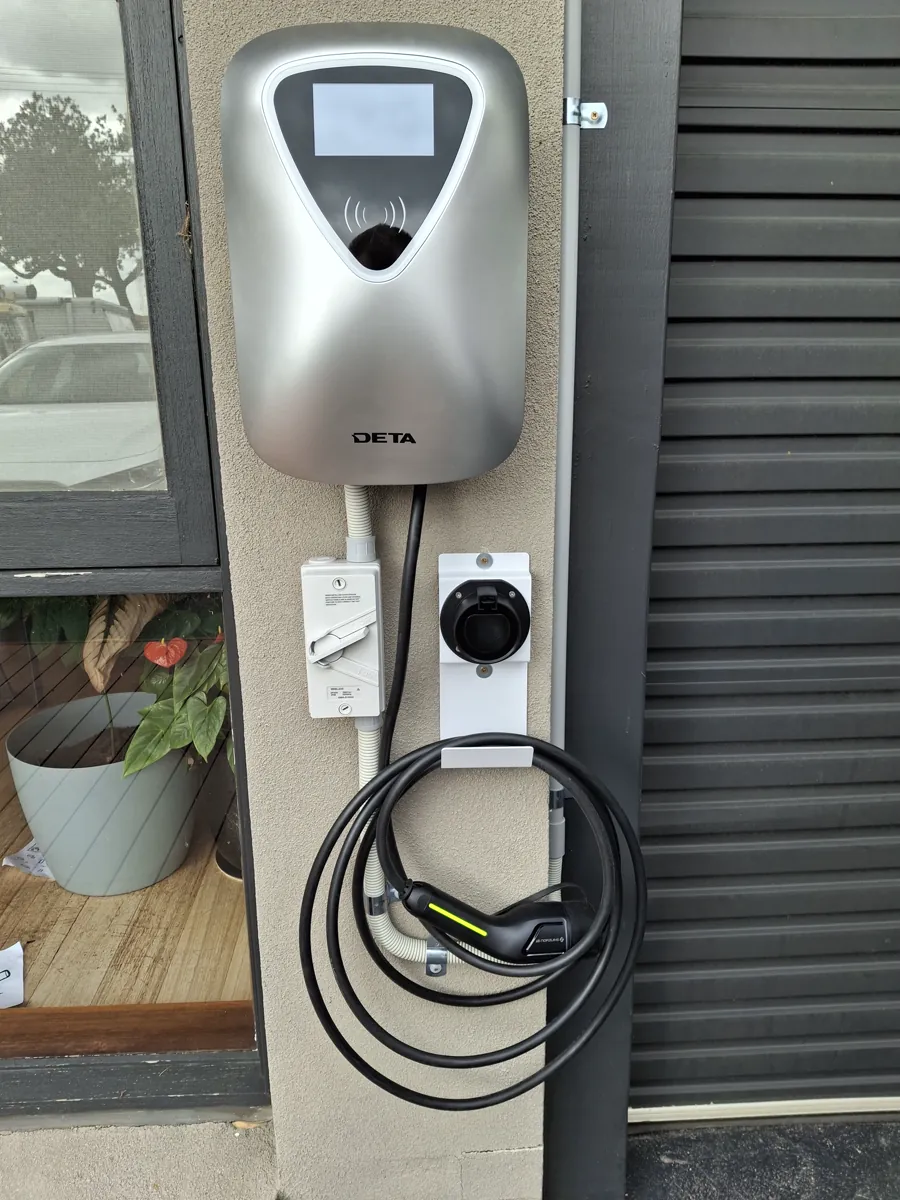
01 / EV charging guidance
The right electrical work depends on the equipment, available supply and site conditions. A useful installation plan for an eastern Melbourne home covers vehicle access, wall position, safe cable handling, electrical capacity and a suitable circuit route. Sloping sites and split-level buildings may introduce practical access challenges that need to be assessed rather than assumed from street photographs. An existing garage sub-board is not automatically suitable for an EV charger. Electrical work must be assessed by a licensed professional, and actual provider coverage should be confirmed for the suburb and property type.
EV charging essentials
These are the details that can change the recommendation.
A lower-level car space can mean a less direct circuit route from the main electrical board and more exposed mounting conditions.
Several waves of renovation can make the supply and circuit layout less obvious from the finished interior. The existing installation needs inspection.
Confirm which wall and services belong to the property and whether common access or approval requirements affect the charging position.
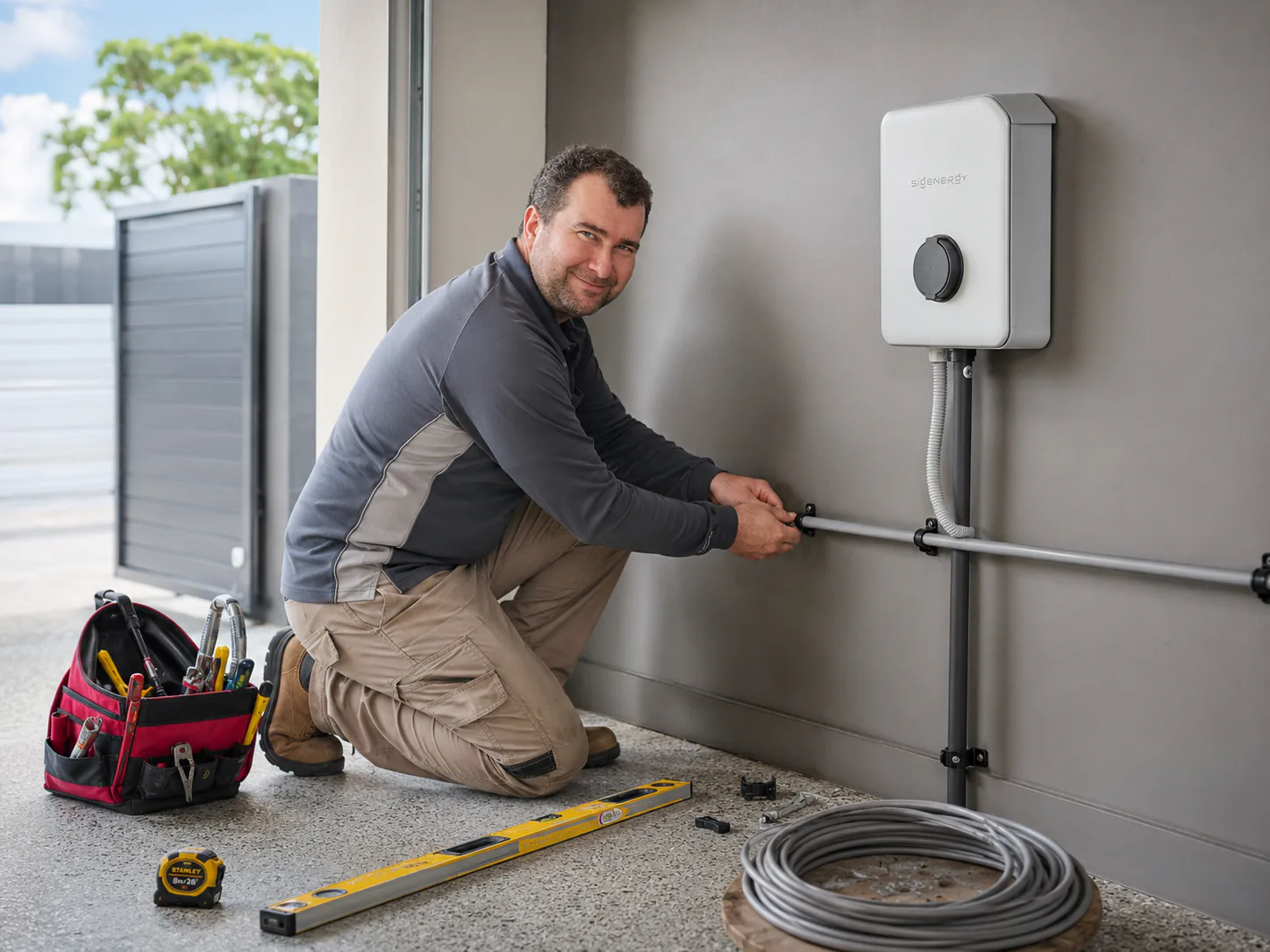
03 / EV charging guidance
A useful quote starts with the right information. The electrical work is scoped after the property, equipment and charging needs have been considered.
Send the suburb, EV and charger models if known, photos of the closed switchboard and a wider photo showing the driveway or garage.
Confirm provider availability, then assess supply, circuit protection, cable distance, mounting and any owners corporation issues.
Agree on the actual electrical route and quote assumptions. An approved licensed provider can then carry out and test the installation.
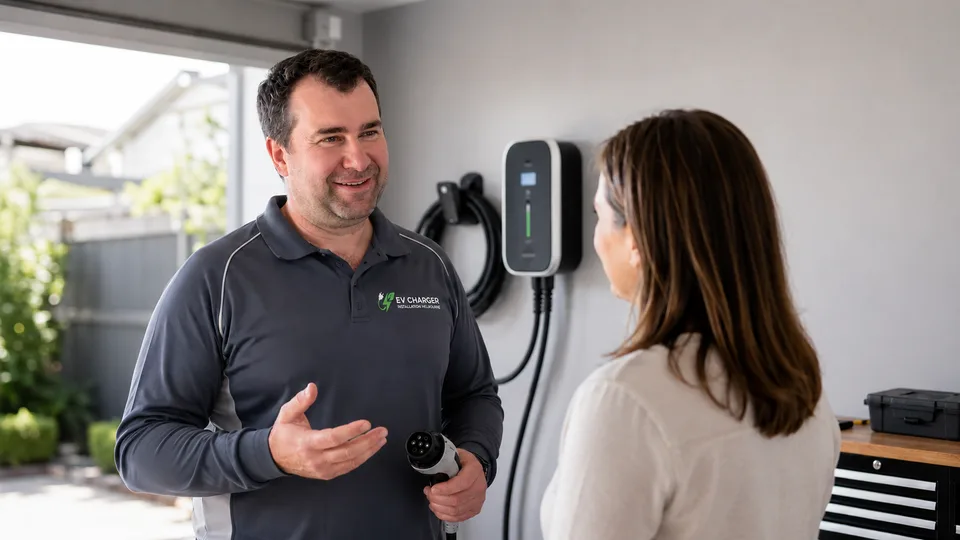
04 / EV charging guidance
The final scope should reflect the property and equipment, not an assumed standard installation.
Roof-space access, internal finishes, retaining walls or distance to parking can change the cable and labour scope.
The switchboard, supply and other loads determine whether the proposed charger can be supported.
The charger should suit weather exposure and allow the lead to reach the vehicle without crossing busy walkways.
Clear advice, tailored to site
The final scope should reflect the property and equipment, not an assumed standard installation.

05 / EV charging guidance
These pages cover connected decisions without repeating the same advice.
Regional charging enquiry coverage and why site access matters as much as postcode.
Home charger selection, practical siting, electrical checks and installation planning.
Supply checks, dedicated circuit needs and the difference between a suitable board and an upgrade.
Helpful answers
Possibly. The mounting position, cable reach, safe pedestrian movement and exposure need careful consideration. The electrical supply route and appropriate product rating also matter. An on-site assessment may be more useful than an assumption from a photo.
There is no reliable suburb-based rule. Existing boards and wiring vary between properties. An electrician should assess condition, capacity, existing loads and protection before deciding whether changes are necessary.
Only if that arrangement is suitable for the proposed charger and compliant electrical design. Available capacity, circuit protection and the connection back to the supply need review. A nearby board is not proof of suitability.
Yes. The model’s outdoor suitability, mounting surface, cable handling and power route need review. A convenient position for the vehicle must also be safe and within the product instructions.
Coverage for a specific suburb and project should be confirmed through an enquiry. The regional page helps with planning but does not guarantee that every installer or specialist service is available at all eastern addresses.
Let’s get you charging
Tell us about your vehicle, parking space and property. EV Charger Install Melbourne can help you start a practical installation enquiry. Request an EV charger quote