Two or more home EVs
Charging schedules and power sharing may matter when several vehicles use one household supply, especially alongside electric appliances and solar.
EV charging across Melbourne
Understand EV charger load management in Melbourne, from dynamic load balancing to multiple\ \ chargers sharing available electrical capacity at a site.
The practical starting point
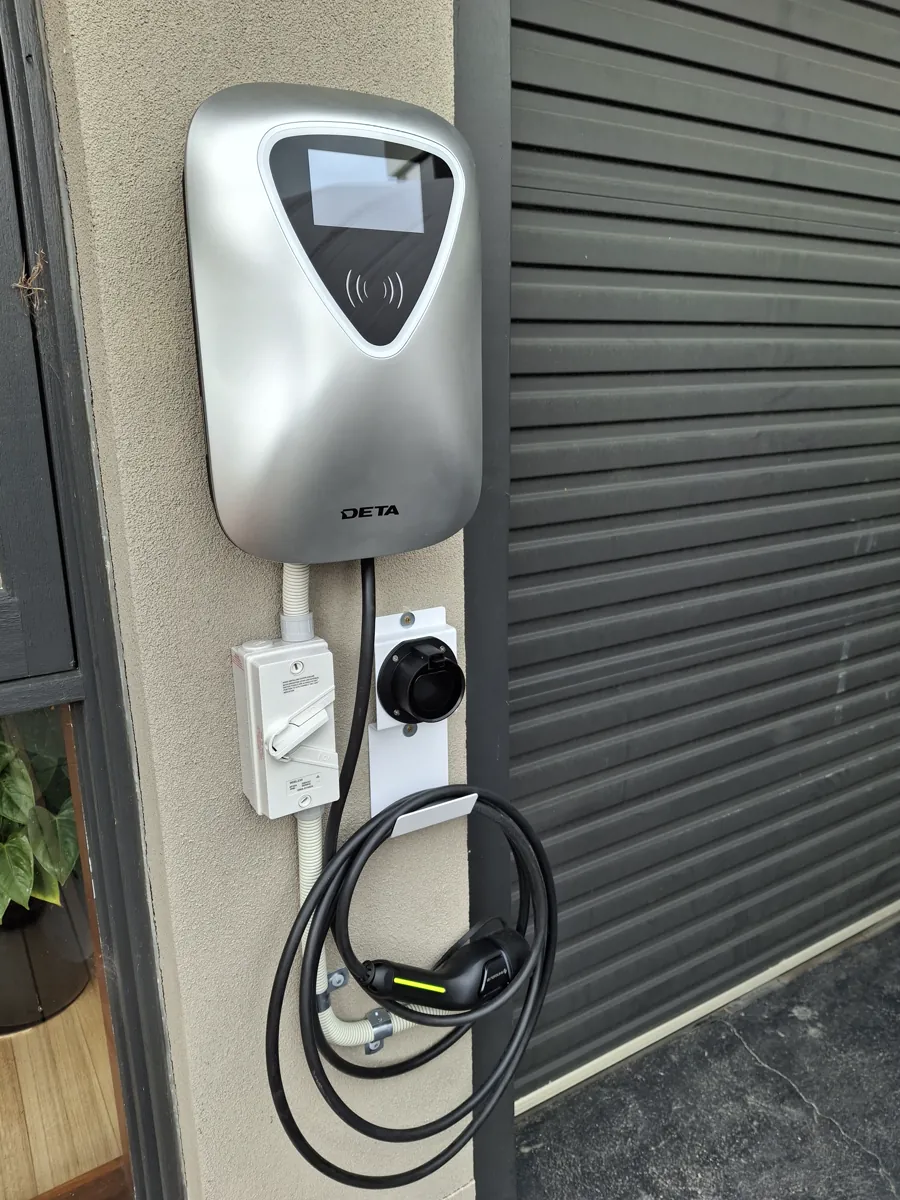
A building’s available electricity is already serving lights, air conditioning, cooking, lifts or business equipment. Adding several chargers increases demand, especially when they operate together. Load management is a way to control how that charging power is allocated, rather than assuming every unit can run at its maximum rating at the same time. The most useful questions are how many vehicles charge together, what the existing site load looks like and whether chargers can accept compatible control signals. A proper design must still identify electrical constraints and protection requirements before any equipment is connected.
01 / EV charging guidance
The right electrical work depends on the equipment, available supply and site conditions. Compatible load-management systems can adjust the power allocated to EV chargers according to a defined limit or available supply. Depending on the hardware and design, control may be static, based on a set allocation, or dynamic, responding to measured demand. The system cannot create extra electrical supply or repair an unsuitable switchboard. Installation also requires appropriate circuits, protection, metering or sensing arrangements and commissioning. A load-control proposal should clarify what happens when demand rises, a communications link fails or additional chargers are installed later.
EV charging essentials
These are the details that can change the recommendation.
Charging schedules and power sharing may matter when several vehicles use one household supply, especially alongside electric appliances and solar.
A managed system may help an owners corporation consider multiple bays without assuming all vehicles charge at full power at once.
Workplaces and fleets can have peak demand when vehicles arrive together. Charging allocation may need to reflect operational priorities and available building capacity.
03 / EV charging guidance
A useful quote starts with the right information. The electrical work is scoped after the property, equipment and charging needs have been considered.
Share the number of chargers, expected vehicle overlap, available electrical drawings and whether other major building loads operate during charging hours.
A technical assessment needs to establish available supply and the most suitable load-control arrangement. The charger models and sensors must be checked for compatibility and safe behaviour.
Agree on the control limits, commissioning tests and owner responsibilities. The final arrangement should be documented in terms that building or fleet users can understand.

04 / EV charging guidance
The final scope should reflect the property and equipment, not an assumed standard installation.
The load profile and supply limits inform the charging budget. A nominal main-switch rating is not a substitute for an electrical assessment.
The charger system, control equipment, communications and metering arrangement must support the proposed behaviour.
The design should account for safe operation if a control signal is lost and identify how additional chargers would affect capacity.
Clear advice, tailored to site
The final scope should reflect the property and equipment, not an assumed standard installation.

05 / EV charging guidance
These pages cover connected decisions without repeating the same advice.
A whole-building view of owners corporation approvals, shared supply and future EV demand.
Fleet duty cycles, depot power requirements and staged charging planning.
App control, schedules, network coverage and smart charging commissioning.
Helpful answers
It is a system approach that can vary charger power based on the electrical demand measured at a site. Its behaviour depends on compatible chargers, current sensing, configuration and the electrical design. It is different from simply setting a fixed maximum rate on one wall unit.
Sometimes it can help use the existing supply more effectively, but it does not guarantee that an upgrade is unnecessary. The existing infrastructure, minimum charging needs and simultaneous building demand must be assessed before deciding.
Not always. Power may be shared differently at different times. When only one vehicle is charging or the building load is low, more capacity may be available. The outcome depends on the control rules, charger system and site limits.
Interoperability varies. Some management systems require specific chargers, protocols or control hardware. Confirm the exact supported models and commissioning method rather than assuming chargers can share power simply because each has an app.
It depends on the product and its configured fallback behaviour. A safe design must account for communications faults without allowing electrical limits to be exceeded. Ask the relevant provider how the actual system handles loss of connectivity or control.
Let’s get you charging
Tell us about your vehicle, parking space and property. EV Charger Install Melbourne can help you start a practical installation enquiry. Request an EV charger quote