Before installation
The vehicle, equipment, property supply, charger position, approvals and quotation assumptions should be understood.
EV charging across Melbourne
Read the home EV charger installation process in Australia, from charger selection and switchboard\ \ checks to licensed electrical work, testing and handover.

The practical starting point
Installing a wall charger involves the property’s electrical system, so the order of decisions matters. It is better to understand where the vehicle will park, what power the home can safely supply and what the manufacturer requires before buying on the basis of an advertised charging rate. A professional installation also needs appropriate circuit design, protection, testing and required documentation. This guide describes what a customer can expect and what information to prepare. It is not wiring instructions and does not authorise anyone to undertake electrical work without the appropriate Victorian licence.
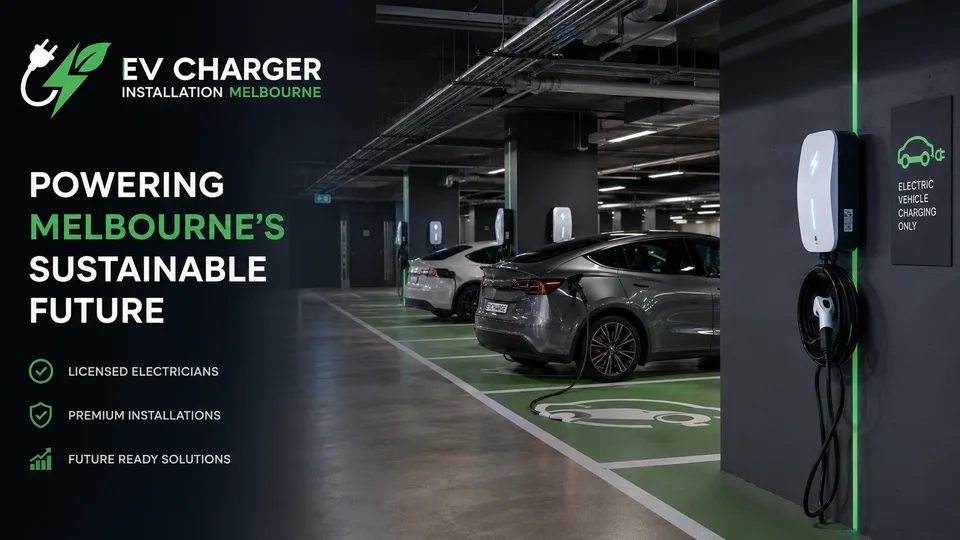
01 / EV charging guidance
The right electrical work depends on the equipment, available supply and site conditions. The process typically starts with vehicle and charger compatibility, then a review of the switchboard, available supply and practical cable route. A suitable provider can recommend a mounting position, determine circuit and protective requirements and scope any necessary additional electrical work. The installation must then be completed and tested in accordance with applicable requirements and current manufacturer guidance. Before the job is considered complete, the user should understand the normal operating method, any connected settings, realistic charging rate and relevant compliance documentation. Site conditions can change the number and order of steps.
EV charging essentials
These are the details that can change the recommendation.
The vehicle, equipment, property supply, charger position, approvals and quotation assumptions should be understood.
A licensed provider carries out the agreed circuit, protection, mounting and connection activities according to the site requirements.
The charger and applicable electrical work are tested, documentation is provided as required and the customer is shown how to operate the finished setup.
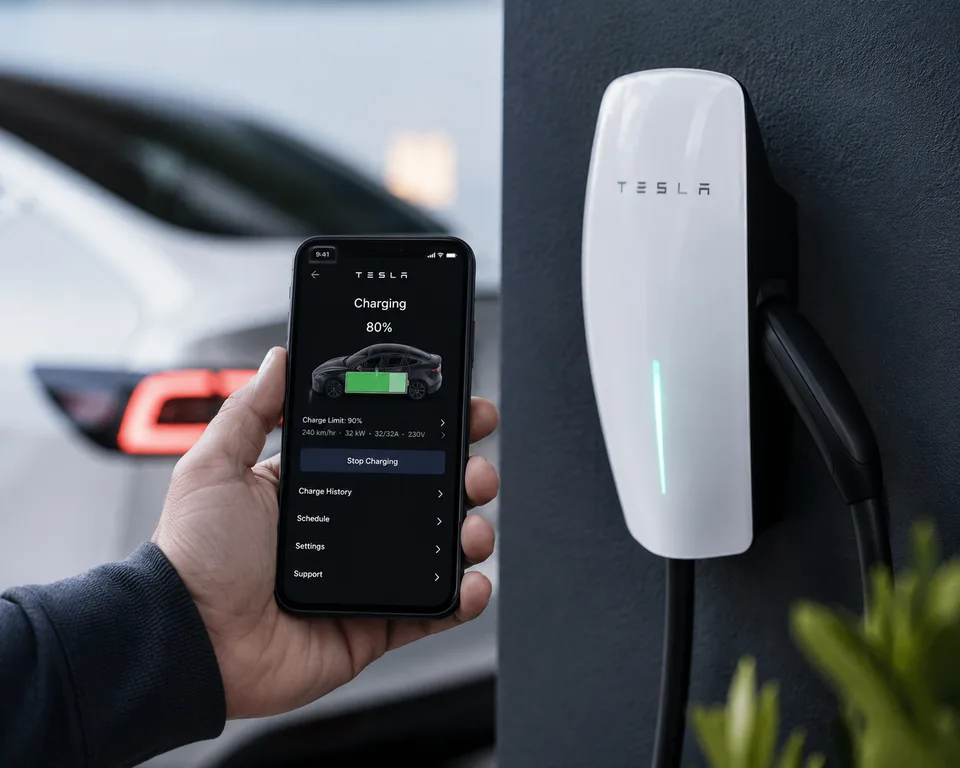
03 / EV charging guidance
A useful quote starts with the right information. The electrical work is scoped after the property, equipment and charging needs have been considered.
Identify the vehicle, likely charger and parking location. An initial enquiry may contain photos of the closed switchboard and proposed mounting surface. Do not open electrical covers.
A licensed electrician assesses supply capacity, circuit and protection requirements, charger compatibility and the route to the parking space. Any additional electrical work should be explained before installation.
The agreed charger and circuit work are installed and tested by the provider. Required compliance records are supplied where applicable, and the customer receives a practical explanation of controls and charging expectations.
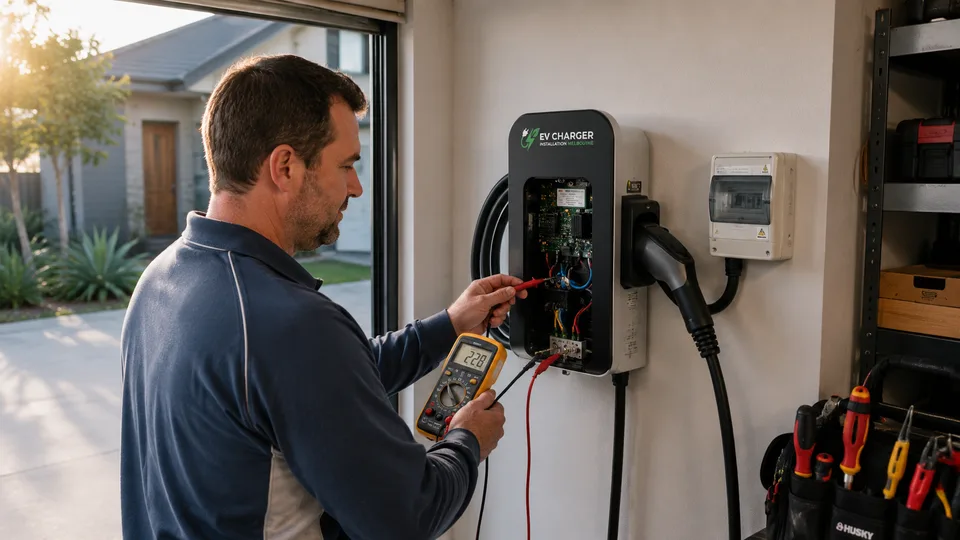
04 / EV charging guidance
A few checks now make the next conversation more productive. Have the vehicle model and charging specifications available, along with the charger manual if you already bought equipment. Make the intended garage or wall area accessible and note where the car normally parks. Share any known property approval requirements, building access rules or relevant information about the electrical board.
Clear advice, tailored to site
A few checks now make the next conversation more productive. Have the vehicle model and charging specifications available, along with the charger manual if you already bought equipment. Make the intended garage or wall area accessible and note where the car normally parks. Share any known property approval requirements, building access rules or relevant information about the electrical board.
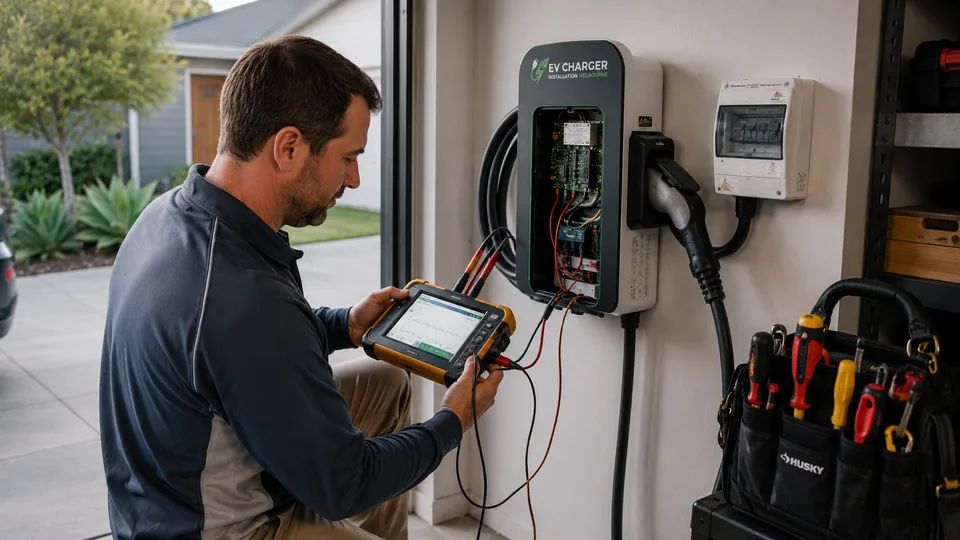
05 / EV charging guidance
These pages cover connected decisions without repeating the same advice.
Home charger selection, practical siting, electrical checks and installation planning.
Supply checks, dedicated circuit needs and the difference between a suitable board and an upgrade.
What information to prepare before requesting an installation price or site assessment.
Helpful answers
Electrical installation and connection work must be performed by appropriately licensed professionals. A wall charger is not just a bracket and cable. The circuit, protection, testing and required documentation are regulated electrical matters.
The electrician considers the vehicle and charger, switchboard condition, available supply, proposed circuit, cable route and mounting location. Shared-property approvals or more complex electrical checks may also be required.
Access requirements should be confirmed with the provider. The site may need access to the switchboard, garage, parking space and any relevant building areas. Handover is easier when someone who will use the charger can receive instructions.
Applicable electrical work in Victoria is subject to relevant electrical requirements and documentation rules. Ask the licensed provider what Certificate of Electrical Safety or other records will be issued for the particular job.
Ask for an explanation of normal starting and stopping, supported charging rate, any scheduling or app setup, cable handling and what to do if the charger reports a fault. Keep the relevant documentation and product instructions.
Let’s get you charging
Tell us about your vehicle, parking space and property. EV Charger Install Melbourne can help you start a practical installation enquiry. Request an EV charger quote